
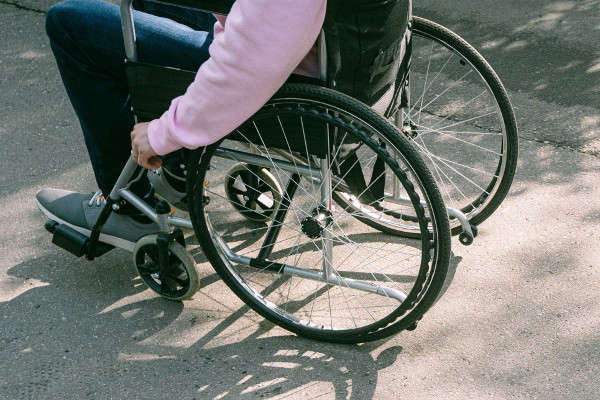
A 44 year mum-of-three from Blackpool tragically died in hospital after a number of serious health challenges were made worse by self-neglect and other factors.
A review by Blackpool Safeguarding Partnerships also heard that, although there had been no evidence that agencies had failed, a number of lessons would need to be learned.
The woman, identified only as ‘Alex’ lived with significant health and mobility challenges linked to morbid obesity.
She died in Blackpool Victoria Hospital from sepsis, lobar pneumonia, cellulitis and a urinary tract infection, with morbid obesity as a contributing factor.
Alex’s death was referred for a Safeguarding Adult Review due to concerns about the living environment and family circumstances.
The Blackpool Safeguarding Partnerships (BSP)is a multi-agency collaboration that aligns child welfare, vulnerable adult protection, and community safety services across Blackpool. It unites key statutory organizations (including the Council, Police, and NHS) to reduce abuse, prevent crime, and promote the well-being of local residents
Extremely poor conditions
A report said: “She lived with her husband and three young children in extremely poor conditions, with clear signs of self-neglect, hoarding and child neglect.
“Two adult children, living elsewhere, had raised concerns that Alex was being neglected by her husband.
“Due to the complex circumstances, and multiple concerns, the Chairs for Safeguarding Adult Review (SAR), Domestic Homicide Review (DHR) and Child Safeguarding Practice Review (CSPR) processes reviewed the information and agreed a SAR was the most appropriate route for consideration.
“The DHR criteria was reconsidered at a later point and a DHR consideration meeting was held in November 2025.”
Several agencies had been involved with the family over a number of years. Adult Social Care had previously supported Alex with a detailed care plan and mobility aids, but this ended in 2016 at Alex’s request.
Children’s Services had implemented a Child Protection Plan the same year due to poor home conditions, with Early Help continuing support afterwards until the family declined support.
Family said no to help
Further concerns were raised in 2023, but the family did not consent to Early Help. When Children’s Services were notified of Alex’s death in 2024, the home was found in extremely poor condition, leading to the children being safeguarded to alternative care.
The family lived in a home provided by a housing association. The housing provider attempted to visit the property on multiple occasions to undertake the gas safety check during 2024, but was unable to gain access, and received no reply to follow up correspondence.
The provider reported that no concerns regarding the external state of the property had been raised.
In the months prior to her death, Alex had several telephone consultations and email correspondence with her GP Practice to request medication to treat suspected cellulitis.
Medication was provided based on the information given and photos provided. Alex was offered face-to-face consultations but declined due to mobility challenges and feeling unwell.
In the days prior to her death, the GP referred Alex to the district nurses who attempted to arrange home visits; however this was not achieved prior to Alex being admitted to hospital where she sadly died.
What has been learned?
The SAR and DHR consideration panels reviewed information from all agencies that worked with Alex and her family and, as there was no evidence to suggest that agencies had failed to work together, the panel agreed that the criteria for review had not been met.
There was however some areas for learning and impact on practice, in the event of similar or identical incidents occurring in the future.
Professional curiosity was inconsistent across agencies. Changes in Alex’s health, mobility and day-to-day functioning were not fully explored, and decisions to decline support were often accepted at face value without considering capacity, executive functioning, or whether Alex had the practical ability to engage.
Identification of carers: There was a missed opportunity to identify Alex’s husband as a carer and to consider whether a statutory carer’s assessment was required. In addition, he was not always actively included in assessments as a father/male carer, despite the involvement and influence he may have had on the wider situation.
Multi-agency coordination and information sharing: Information about environmental concerns and increasing risks was held across different agencies but was not consistently shared or escalated, which limited the wider understanding of the situation.
Think Family and whole-household safeguarding: Adult needs, children’s needs and environmental risks were closely interconnected. While elements of a Think Family approach were evident, this was not consistently embedded across all services. Although children’s voices were heard within education settings, this insight did not always lead to wider multi-agency action.
Multi-agency coordination and information sharing: Information about environmental concerns and increasing risks was held across different agencies but was not consistently shared or escalated, which limited the wider understanding of the situation.
Bariatric care needs: Alex was morbidly obese and appeared not to have left the home environment for some time, despite requiring medical assistance. Support from the Fire Service was needed to transport Alex to hospital for treatment prior to her death. Additional support for bariatric care needs requires exploration to ensure appropriate pathways are available and clearly understood by practitioners at the earliest opportunity.
 Blackpool Celebrates Armed Forces Week
 Transport operator prepares ‘moving’ tribute to Armed Forces
 Plans for new hot food trailer at town centre site
 Residents in Weeton fighting plans for nearly 50 homes as meeting looms
 Decision made on apartments proposal in Blackpool’s North Shore
 We need land to be used as public amenity with play area, says councillor