
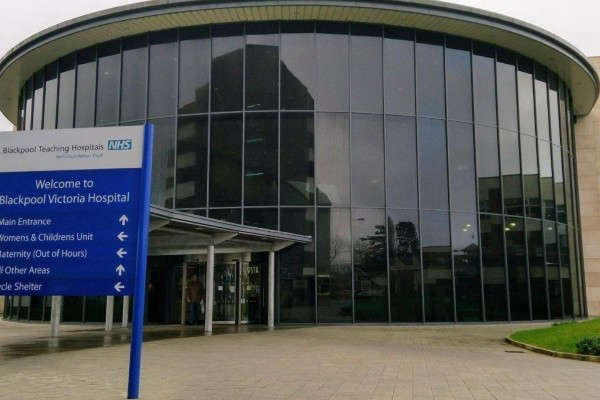
Blackpool Victoria Hospital’s maternity services have again been rated as ‘requires improvement’ by inspectors – but a report accepts some improvements have been made since the previous visit.
The Care Quality Commission (CQC) handed out the rating of the hospital services, part of Blackpool Teaching Hospitals NHS Foundation Trust, following an inspection in March.
CQC inspectors undertook the inspection at the maternity unit, which delivers approximately 3,000 babies every year, to follow up on concerns raised at a previous inspection.
Inspectors visited the maternity day unit, triage, antenatal ward, postnatal ward, delivery suite and obstetric theatres.
Among the chief concerns raised were issues with staffing, with a lack of consultant availability causing delays in women having high-risk pregnancies.
Worryingly, there was also found to be a shortage of midwives, despite the Trust making efforts to improve the situation.
However, the report found that in other areas, there was ‘innovative practice’ and staff ‘going the extra mile’ for patients.
How they rated
Following this inspection, CQC has improved the service’s safety rating from inadequate to requires improvement; caring is rated good again; the category ‘effective and well led’ has been rated requires improvement again, and the category responsive has gone up from requires improvement to good. The overall rating for the maternity service remains rated as ‘requires improvement’.
Blackpool Teaching Hospital said that it was “reassuring to see that, while the service remains rated overall as requiring improvement, inspectors have rightly noted areas of good practice and improvement.”
What CQC says
Linda Hirst, CQC deputy director of operations in the north-west, said: “When we returned to the maternity service, we found some areas of innovative practice and staff going the extra mile. However, leaders need to make further improvements, particularly around staffing, to ensure people and their babies are receiving the appropriate level of care they deserve.
“A lack of consultant availability caused delays in women having high-risk pregnancies, receiving caesarean sections which could place them at risk of harm. Leaders recognised there was insufficient capacity for elective caesarean sections and had developed a business case to request additional funding and resources.
“Despite leaders increasing the numbers of midwives, there was still a shortfall in the numbers available when we inspected. Specialist midwives were often used to cover staff absences meaning they had less time to focus on their specific duties such as issues arising in the community or an increase in home births.
“However, staff engaged proactively with seldom heard groups including those facing challenges in the care system who didn’t always attend appointments. They attended community hubs in the local area to invite prospective parents to join classes.
“Staff also hosted an educational programme supporting expectant parents in managing the emotional and physical transition into parenthood that received positive feedback.
“We’ve shared our findings with the trust so they know where there’s good practice to build on and where significant improvements must still be made. Following the inspection, leaders took action to address the concerns and submitted an action plan to provide assurance that action was being taken. We’ll continue to monitor the service closely to ensure people and their babies receive safe care while these improvements are ongoing.”
What inspectors found
Inspectors found:
- Leaders didn’t always ensure incidents were reported consistently and closed in a timely way.
- Consultants didn’t always conduct daily ward checks which led to delayed assessments and women and their babies being discharged late.
- Last year’s staff survey showed only 44% of staff felt confident that the organisation would address concerns about unsafe clinical practice.
- The service had significant delays in sharing results of perinatal mortality reviews with families which impacted their grieving.
- External partners reported that gaps in obstetric and midwifery leadership roles had impacted the trust’s ability to progress with key improvements.
However:
- The triage unit had implemented a dedicated phone line, and a safety message that explained what to do if people’s condition deteriorated while they waited.
- Staff ensured people were treated with dignity and always checked if they could enter the bed area when curtains were closed to give people privacy.
- Leaders introduced a colour coded assessment tool that identified women with reduced foetal movements so they could be seen quickly.
- Staff were on hand to give assistance when needed, for example with personal care and breastfeeding.
- Staff knew how to recognise, report abuse and worked well with other agencies.
What hospital trust says
Maggie Oldham, Chief Executive of Blackpool Teaching Hospitals, said: “It is reassuring to see that, while the service remains rated overall as requiring improvement, inspectors have rightly noted areas of good practice and improvement. These include the implementation of a dedicated phone line to the triage unit, and the introduction of a colour coded assessment tool that identifies women with reduced foetal movements.
“I’m particularly pleased to see that the Trust has improved in both Safe and Responsive domains, with the latter improving from requires improvement to good. I am also encouraged that the ratings for Caring, Effective and Well Led have been sustained.
“This is reflective of the tremendous work done by our colleagues.
“While we understand there is still work to be done, it’s important to recognise the focus and determination of colleagues who work tirelessly to ensure our mothers receive the best possible experience while they are under our care.
“We welcome the inspectors’ findings and I’d like to reassure our patients, families and carers that we will continue to improve our services, supported by our external colleagues, including the Local Maternity and Neonatal System, the CQC and other regional partners.”
The report will be published on CQC’s website in the next few days.
 An increase in beggars is affecting town centre, say businesses
 Decision made on plans for holiday flats in South Shore
 Vibrant gallery and bar proposals will bring Northern Qurter vibe to resort
 Major decision made on apartments scheme for iconic Blackpool building
 Verdict in on plans to create flat above funeral home
 Drop-in session set for Revoe area as demolition plans draw nearer